
Best Website Platforms for Surface Pattern Designers in 2026
Free, Portfolio, Ecommerce, and the Real Tradeoffs
Surface pattern designers keep asking:
What is the best website platform?
There is no best platform. There is only alignment.
Your website is infrastructure. It should reflect how you make money.
Are you licensing?
Selling print on demand products?
Building authority through blogging?
Just starting and need something affordable?
Every platform handles those goals differently. Every platform comes with tradeoffs.
Free Website Platforms for Surface Pattern Designers & illustrators
I’ll say this: starting simple is not a mistake. It just has limits.
Canva Websites

Canva websites are fast and visually appealing.
They work well for:
- Link in bio pages
- Temporary portfolios
- Early stage designers
- Clean single page showcases
The tradeoffs:
- Limited SEO control
- No advanced blogging structure
- Not built for scaling
- Minimal customization
If you need something live quickly and free, this works.
It is not long term authority infrastructure. Your site will never rank organically, so you’ll be solely responsible for funneling traffic to your site. That’s the harsh truth.
Behance
Behance gives you exposure inside a creative community.
Pros:
- Built in traffic potential
- Easy uploads
- No hosting responsibility
Tradeoffs:
- You do not own the platform
- Limited branding
- No control over search infrastructure
- No structured licensing funnels
Behance is visibility. It is not suitable as your business foundation.
Portfolio Website Platforms for Designers & Artists
If you want your own domain and a more professional presentation, this is the next tier.
PhotoBiz
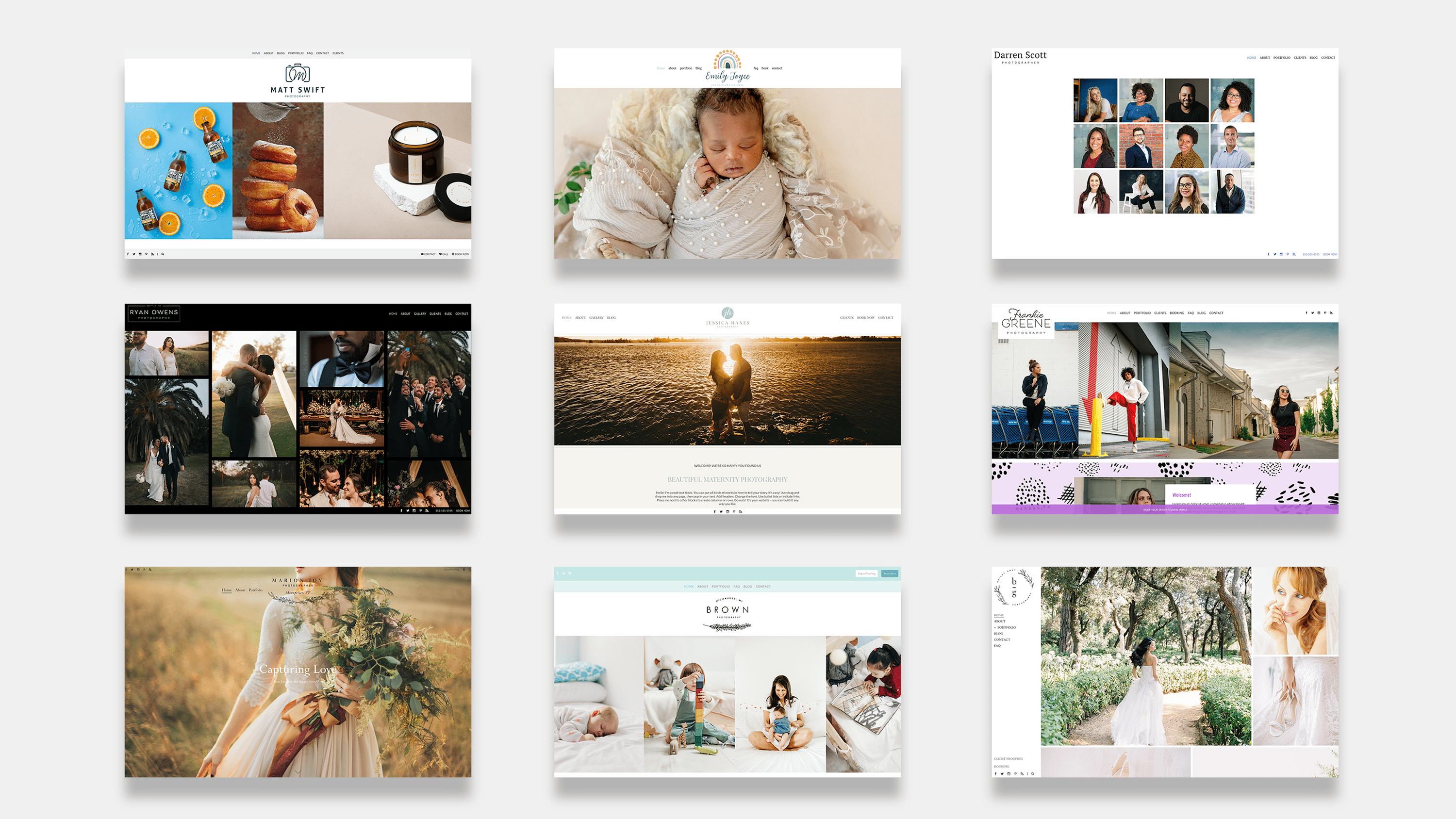
Built for photographers. Surprisingly strong for surface pattern designers.
Why it works:
- Strong gallery structure and file delivery options
- Clean collection presentation
- High resolution image handling
- Hosted and low maintenance
What it is not built for:
- Complex blogging ecosystems
- Heavy ecommerce
- Advanced content architecture
If you are licensing focused and need a polished portfolio with inquiries, this can absolutely work.
Squarespace
Squarespace is popular with creatives for a reason.
Strengths:
- Elegant templates
- Easy blogging
- Built in hosting
- Light ecommerce
Tradeoffs:
- Structured system
- Less backend flexibility
- Custom architecture has limits
Now, let’s address something important…
Squarespace blogs can rank.
PhotoBiz blogs can rank.
You do not need advanced schema manipulation to rank for:
floral surface pattern designer
modern repeat pattern portfolio
surface pattern licensing artist
You need:
- Clear H1 to H3 structure
- Focused keywords
- Strong alt text
- Descriptive image filenames
- Consistent content
Most surface pattern designers never go deep enough into WordPress SEO for the difference to matter.
Execution matters more than platform.
Ecommerce Platforms for Surface Pattern Designers
If selling products is part of your revenue mix, things shift.
Shopify
Shopify is ecommerce first.
Strengths:
- Optimized checkout
- Easy multichannel selling
- Seamless integrations with Printful and Printify
- Low maintenance
Tradeoffs:
- Blogging is basic
- Portfolio structure is secondary
- Less content architecture flexibility
If your business is product volume driven, Shopify reduces friction.
WordPress with WooCommerce
WordPress can do everything.
Portfolio. Blog. Ecommerce. Licensing funnels.
Strengths:
- Full ownership
- Flexible structure
- Scalable architecture
- Deep customization
Tradeoffs:
- More setup
- More responsibility
- Less plug and play
Now here is the nuance…
WordPress only outperforms other platforms if you actually use its depth.
Most small creative businesses never need advanced structural SEO.
They need clarity and consistency.
If you are not building complex content silos, the difference is smaller than people claim. That said, WordPress provides endless potential, so it would allow you that wide open space where literally ANYTHING is possible on your website in the future. And for me personally, that’s worth a lot.
The Hybrid Model for Surface Pattern Designers
Sometimes the answer is not choosing. It is defining roles.
WordPress can handle authority and portfolio.
Shopify can handle checkout and all your POD and social integrations.
Stack intentionally instead of arguing about which one wins.
This is strategic alignment, not platform loyalty.
Nothing Is Without Tradeoff
This is the part most comparisons skip.
If you choose free tools:
You gain simplicity.
You lose scalability.
If you choose Shopify:
You gain ecommerce ease.
You limit content structure.
If you choose WordPress:
You gain control.
You accept a little more complexity.
If you choose Squarespace or PhotoBiz:
You gain simplicity and presentation.
You accept structural boundaries.
Every platform bends somewhere.
The real question is:
Which tradeoffs are you willing to bend on?
The Bigger Mistake Is Building Without Clarity
Most designers do this:
They choose what looks popular.
They build emotionally.
They realize later it does not match their revenue model.
Rebuilding is expensive. Planning is not.
Before You Build, Get Clear
Your website should reflect:
- How you make money
- How clients find you
- How you want to grow
- How much complexity you can tolerate
That is strategic work.
If you want clarity before committing to a platform, this is exactly what my 1:1 strategy sessions are designed for.
We map:
- Licensing vs product priorities
- Traffic strategy
- Content plan
- Platform alignment
- Growth trajectory
Then we choose infrastructure intentionally.
Because your website is not just a portfolio.
It is your business foundation.
And foundation decisions deserve strategy.
Get Clear Before You Commit
If you are about to build or rebuild your website, pause.
Choosing a platform without clarity is how designers lose months to rework.
In a 1:1 strategy session, we will:
- Define your actual revenue model
- Clarify licensing vs product priorities
- Map your traffic strategy
- Identify the platform that fits your long term growth
Before you invest time or money in the wrong infrastructure.
If you want confidence in your decision instead of guessing, book a strategy session with me.
Let’s design your foundation intentionally.