
How to Create Brand Guidelines (Step-by-Step Brand Style Guide Tutorial)
If you’ve ever wondered how to create brand guidelines for your business, you’re not alone. Many entrepreneurs and creators start building their brand visually before ever documenting the rules behind it.
A brand guidelines document (sometimes called a brand style guide, brand identity guide, or brand guide) helps ensure your brand stays consistent across your website, social media, marketing materials, and collaborations.
Without clear brand guidelines, it’s easy for colors, typography, imagery, and messaging to slowly drift in different directions.
In this guide, you’ll learn how to make brand guidelines step-by-step, what to include in a brand style guide, and how to build a brand guidelines document that keeps your brand consistent and recognizable.
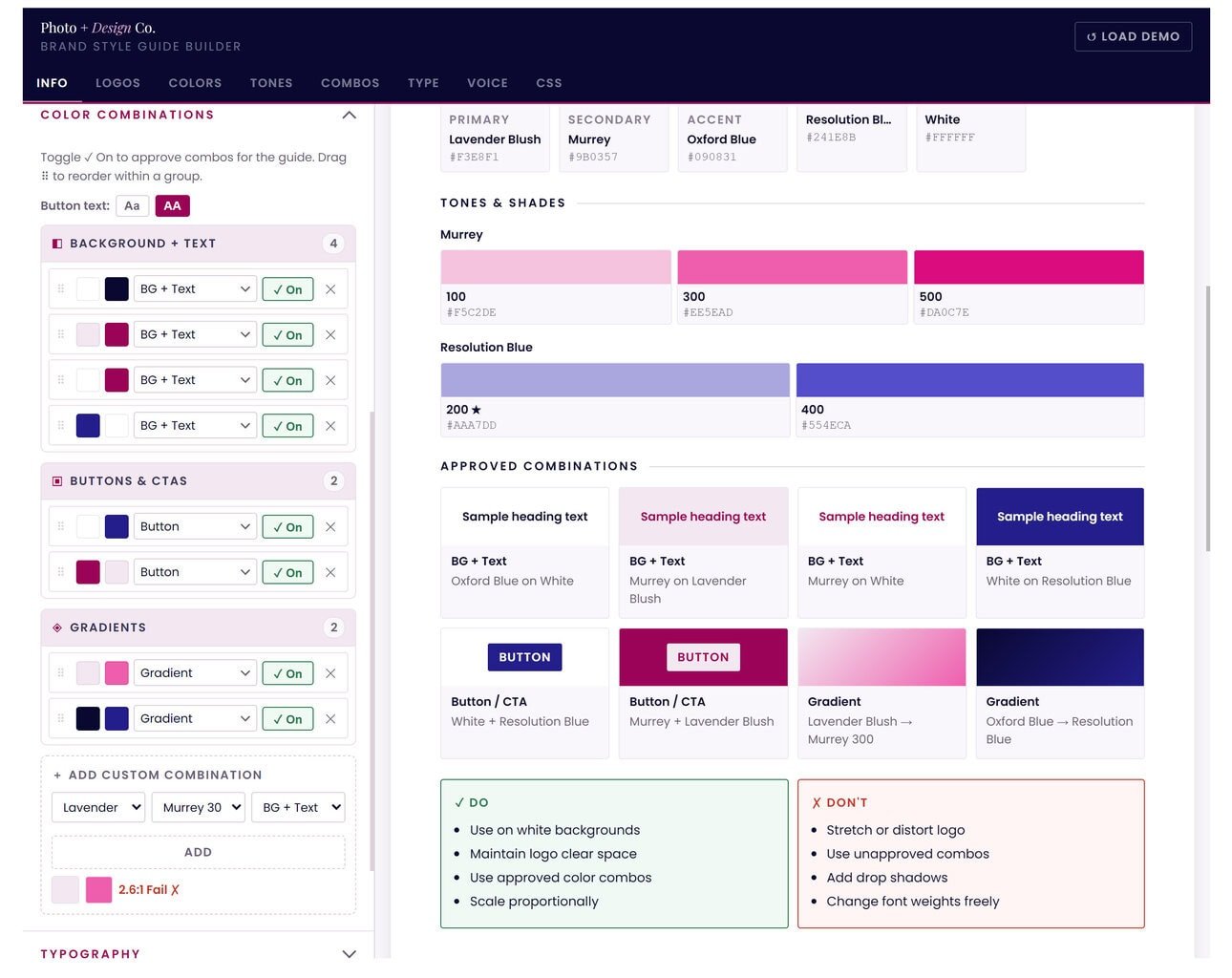
Want an Easier Way to Create Visual Brand Guidelines?
If you’re trying to figure out how to create brand guidelines, you might already be realizing something:
pulling together colors, typography, and usage rules manually can get messy fast.
That’s exactly why I built the Brand Style Guide Builder.
Instead of juggling documents, screenshots, and design files, the builder helps you:
• organize your brand colors
• define typography hierarchy
• assign usage rules
• visualize your brand system
• export a clean brand guideline document
You can explore it here:
👉 Try the Brand Style Guide Builder
What is a Brand Style Guide?
A visual brand guide is a document that defines how your brand should look, sound, and appear across all platforms.
You may hear them called:
- brand guidelines
- brand style guide
- brand identity guide
- brand guide
- brand guidelines document
No matter the name, the purpose is the same: to create clear rules for how your brand should be used.
A well-structured brand guideline helps ensure that:
- your colors stay consistent
- your typography stays cohesive
- your visual identity stays recognizable
- your messaging stays aligned
This is why companies of all sizes create brand guidelines. Even solo creators and small businesses benefit from having a clear brand style guide.
Why A Visual Brand Style Guide Matters
If you’re wondering whether you really need to create a brand style guide, the short answer is yes.
A strong brand guidelines document provides several important benefits.
Consistency Across Platforms
When you know exactly which colors, fonts, and visuals belong to your brand, it becomes much easier to maintain a cohesive look everywhere.
Faster Content Creation
Once you’ve defined your brand system, you won’t have to reinvent design decisions every time you create something.
Stronger Brand Recognition
Consistent visual identity builds familiarity and trust with your audience.
Easier Collaboration
If you ever work with designers, developers, marketers, or collaborators, your brand identity guide becomes a reference point for how your brand should appear.
What to Include in Brand Guidelines
If you’re learning how to create a brand style guide, the next step is understanding what belongs inside it.
Most brand guideline documents include the following sections.
Brand Mission and Core Values
Your brand guidelines should begin with a short explanation of your brand’s purpose.
This helps anchor the visual identity in something deeper than design.
Include things like:
- your mission statement
- your brand values
- your positioning or philosophy
These elements provide context for the rest of your brand identity guide.
Logo Usage
Your brand guidelines document should clearly define how your logo should appear.
This section often includes:
- primary logo
- alternate logo versions
- minimum spacing around the logo
- acceptable background colors
- examples of incorrect usage
These rules help protect the integrity of your brand visuals.
Brand Color Palette Guide
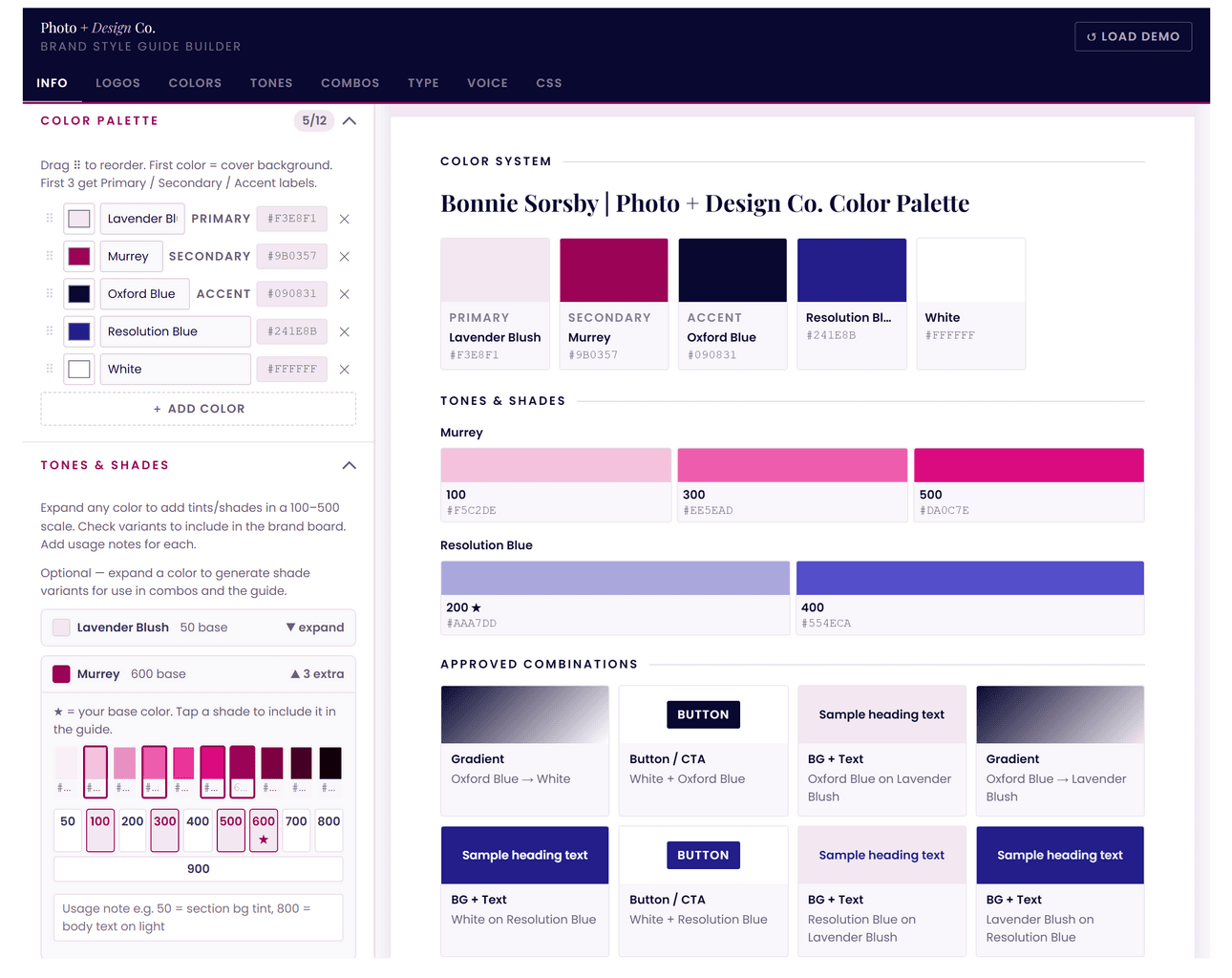
One of the most important sections of any brand style guide is the color palette.
When you create brand guidelines, your color section should include:
- primary brand colors
- secondary palette colors
- accent colors
- hex codes
- RGB values
- CMYK values (for print)
Defining these colors ensures your brand visuals stay consistent across digital and print environments.
Many designers create their palettes using a brand color palette builder or color palette generator before locking those colors into their official brand guidelines.
You might also enjoy this blog post: How to Build a Brand Color Palette
Typography in Your Brand Style Guide
Typography plays a major role in brand identity.
Your brand guideline should clearly document the fonts used throughout your brand.
This section typically includes:
- headline fonts
- body text fonts
- accent or display fonts
- recommended font pairings
- hierarchy rules for headings and text
Defining typography helps maintain visual consistency across websites, graphics, and marketing materials.
Imagery Style
When learning how to make a brand guide, many people overlook the imagery section.
But your brand guidelines should also define how photos, graphics, and visuals should feel.
For example:
- photography style
- lighting and color mood
- illustration style
- graphic textures or patterns
- overall aesthetic direction
This helps ensure your visuals feel cohesive even when the exact images change.
Brand Voice and Tone Style Guide
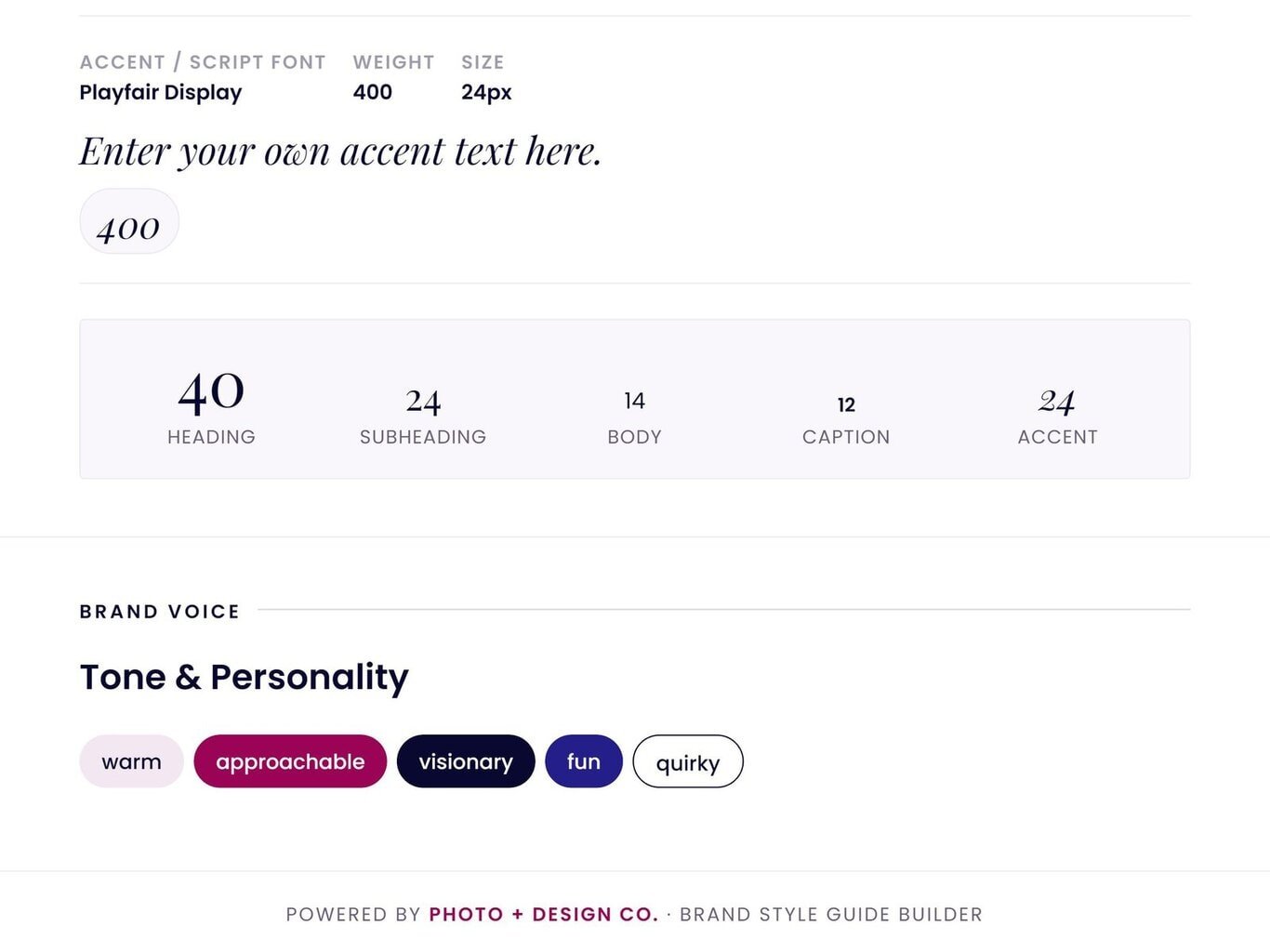
A complete brand identity guide doesn’t only define visuals. It also defines how your brand communicates.
Your brand voice section might include:
- tone of voice (friendly, educational, playful, etc.)
- messaging style
- writing personality
- preferred phrases or language patterns
When you create brand guidelines, documenting your voice helps ensure consistency across blog posts, social media, emails, and marketing.
How to Create Brand Guidelines Step-by-Step
Now let’s walk through how to create brand guidelines in a practical way.
These steps will help you build a complete brand guidelines document for your business.
Step 1: Define Your Brand Identity
Before you design anything, clarify the foundation of your brand.
This includes:
- your mission
- your audience
- your positioning
- your values
Understanding these elements makes it easier to build a visual identity that feels authentic.
Step 2: Choose Your Brand Colors
Next, define your brand color palette.
When you build a brand guideline, your palette should include:
- primary colors
- supporting colors
- accent colors
These colors will become the visual backbone of your brand.
How to Build a Brand Color Palette goes deeper into this topic.
Step 3: Select Your Typography
Once your colors are defined, choose typography that complements your brand personality.
Most brand systems use:
- one primary headline font
- one body font
- optional accent or display font
Your brand style guide should explain when and how each font should be used.
I speak more on the topic of typography and the language of this art in this blog post: Typography-Based Logo Design: Why Less Is More in Modern Branding
Step 4: Define Your Visual Style
This step focuses on imagery and graphics.
Your brand guidelines document should describe the overall look and feel of visuals used in your brand.
This might include:
- photography mood
- graphic elements
- illustration styles
- layout preferences
Step 5: Define Your Brand Voice
Brand guidelines are not only visual.
If you want a complete brand identity guide, include a section explaining how your brand communicates.
For example:
- tone (casual vs professional)
- personality (playful, thoughtful, bold, etc.)
- writing style
This ensures consistency across content and messaging.
Learn more about Brand Voice & Messaging Strategy here
And the Brand Foundations Workbook is a free resource that I developed for entrepreneurs to establish your voice, values, mission, and getting clear on your ideal client.
Step 6: Organize Everything Into a Brand Guidelines Document
The final step in how to make brand guidelines is compiling everything into one clear document.
Many brands create their brand guidelines as:
- a PDF
- a Notion page
- a website style guide page
- a visual brand guide board
The goal is simply to create a central reference for your brand.
Brand Guidelines Examples
If you want inspiration for how to create a brand style guide, it can help to study brands that publish their guidelines publicly.
Many companies share brand guideline resources online.
For example:
- Apple
- Spotify
- Airbnb
- Uber
Looking at these examples can help you understand how brands structure their brand guidelines documents.
Tools That Help You Create Brand Guidelines
You don’t necessarily need advanced design software to make a brand style guide.
Many creators build brand guideline documents using tools that help organize colors, typography, and design rules into one cohesive layout.
A brand style guide builder can make this process much faster by allowing you to:
- define brand colors
- assign typography hierarchy
- visualize layout examples
- export a clean brand guideline document
This approach can simplify the process of creating brand guidelines, especially if you’re building your brand system on your own.
Free Brand Guidelines Checklist
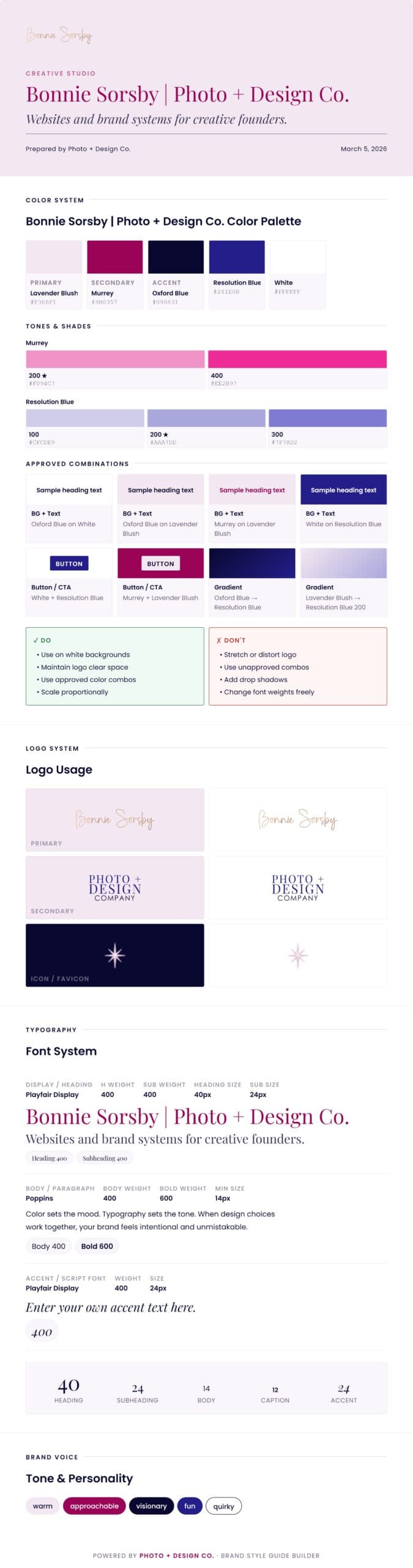
If you want a simple starting point for how to create a brand guidelines document, your guide should include:
- brand mission and values
- logo rules
- brand color palette
- typography system
- imagery direction
- brand voice and tone
- layout examples
Once these elements are defined, your brand will have a clear visual and messaging system.
Final Thoughts on Creating Brand Guidelines
Learning how to create brand guidelines is one of the most valuable things you can do for your business.
A clear brand style guide ensures your brand stays consistent as you grow, create content, collaborate with others, and expand your presence online.
Whether you call it a brand guideline, brand identity guide, or brand style guide, the goal is the same:
To document the visual and messaging system that makes your brand recognizable.
Once your brand guidelines document is in place, everything from website design to social media graphics becomes easier and more cohesive.
Frequently Asked Questions About Creating Brand Guidelines
What are brand guidelines?
Brand guidelines are a document that explains how a brand should look, sound, and appear across different platforms. A brand guidelines document usually defines things like logo usage, brand colors, typography, imagery style, and brand voice.
Many businesses create brand guidelines so their visual identity stays consistent across websites, social media, marketing materials, and collaborations.
Brand guidelines are sometimes also called a brand style guide, brand guide, or brand identity guide.
What should a brand guidelines document include?
A complete brand guidelines document usually includes several key elements.
Most brand style guides define:
- brand mission or positioning
- logo usage rules
- brand color palette
- typography hierarchy
- imagery style and visual direction
- brand voice and tone
- layout examples or design rules
These elements help ensure your brand looks consistent anywhere it appears.
How do you create brand guidelines?
To create brand guidelines, start by defining the core elements of your brand identity.
A typical process for how to create brand guidelines includes:
- defining your brand mission and positioning
- choosing your brand color palette
- selecting typography
- defining imagery style
- documenting brand voice and tone
- organizing everything into a brand guidelines document
Once these pieces are defined, they can be compiled into a brand style guide or brand guide that acts as a reference for your brand.
How do you make a brand style guide?
If you’re wondering how to make a brand style guide, the goal is simply to organize the key visual and messaging elements of your brand into a clear document.
A brand style guide typically includes:
- brand colors and hex codes
- font choices and typography rules
- logo variations
- imagery examples
- messaging guidelines
Some businesses create their brand style guide manually in a PDF, while others use tools that help structure and organize brand guidelines more visually.
Do small businesses need brand guidelines?
Yes. Even small businesses benefit from creating brand guidelines.
When you build a brand guideline, it becomes much easier to keep your website, social media, and marketing materials visually consistent.
Without brand guidelines, design decisions often change over time, which can make a brand look less cohesive.
A simple brand style guide helps keep everything aligned as your business grows.
What is the difference between brand identity and brand guidelines?
Brand identity refers to the visual and conceptual elements that define a brand, including colors, typography, logo design, imagery, and messaging style.
Brand guidelines, on the other hand, are the document that explains how to use that identity correctly.
In other words:
- brand identity = the design system
- brand guidelines = the rules for using it
A brand identity guide or brand style guide helps ensure those elements are used consistently.
How long should brand guidelines be?
Brand guidelines can vary widely depending on the size of the brand.
Some small businesses create a simple one-page brand guide, while larger companies produce detailed brand guideline documents that are dozens of pages long.
The goal isn’t length — it’s clarity.
Your brand guidelines should include enough information that someone else could accurately represent your brand visually and verbally.
What format should brand guidelines be in?
Brand guidelines can be created in several formats.
Common formats include:
- PDF brand guideline document
- website-based brand style guide
- visual brand boards as an easy to share JPEG
- internal documentation tools
The important thing is that your brand guidelines are easy to reference and share when needed.