
Motivation and Pathological Demand Avoidance (PDA)
Finding What Truly Works to Get Motivated
Motivation is one of those things we’re all told we should just have. The world says if you want something badly enough you’ll push yourself, set goals, and follow through. But if you resonate with Pathological Demand Avoidance (PDA), you may already know that traditional approaches to motivation rarely work. Sometimes even the smallest task can feel like a mountain when it comes with a sense of demand.
I’m not here to present myself as an expert on PDA. I’m still learning and listening, especially to the growing number of adults and parents who are sharing their stories. What I do know is that many people feel deep resonance when they discover PDA and finally understand why they struggle with expectations, even when those expectations are self-imposed.
This post is an exploration. I want to look at how we can reframe motivation in ways that actually work for PDA humans. And because Human Design is one of the tools I use to understand energy, I’ll bring that lens into the conversation too.
Why Motivation Looks Different for PDA Humans
For most people, motivation is framed as discipline. If you want to get something done, you set a deadline, hold yourself accountable, or reward yourself when you finish. Those strategies rely on applying pressure.
For PDA humans, pressure has the opposite effect. A task that feels urgent or demanded can trigger resistance, avoidance, or even shutdown. It isn’t laziness or lack of willpower. It’s the nervous system reading demand as unsafe, which makes the very idea of “pushing through” nearly impossible.
This is why motivation for PDA humans has to be understood differently. It isn’t about pushing harder or finding stronger discipline. It’s about creating conditions where energy flows naturally. Autonomy, choice, play, and safety become the foundation. When something feels like it’s truly yours to choose, motivation can return almost effortlessly.
Human Design’s Lens on Motivation
In Human Design, motivation is not about pep talks or discipline. It is the deeper driver behind why you act in the first place. There are six motivations, and each one has a very different flavor. Knowing yours makes it easier to recognize what naturally sparks your energy.
For PDA humans, this can be a breakthrough. When motivation lines up with your natural driver, it feels like choice. When it does not, it can feel like pressure, which often triggers resistance.
Here is a look at each motivation and how it might show up:
Fear Motivation
Fear does not mean panic. It means you are naturally motivated to prevent problems and anticipate what could go wrong. For someone with PDA, being told “you must do this to avoid disaster” can lock up the system. But when they choose to explore their own instincts, like researching options before committing, fear becomes an empowering guide instead of a demand
Hope Motivation
Hope is about seeing possibility and believing in what could unfold. A PDA human with hope motivation may resist strict step-by-step plans but thrive when allowed to dream and hold onto a sense of potential. If they feel forced into being “realistic,” motivation fades. When they are free to imagine, energy rises.
Desire Motivation
Desire is fueled by wanting to experience more or to reach something meaningful. For PDA humans, the key is whether the desire is truly theirs. If someone else sets the bar, resistance may flare. When the desire comes from within, it can create unstoppable momentum
Guilt Motivation
Guilt motivation is about responsibility and contribution, not shame. For PDA humans, outside “shoulds” around responsibility can feel heavy. When responsibility is chosen freely, such as caring for someone they love or showing up authentically, it creates flow and purpose.
Need Motivation
Need thrives on essentials. It is about what matters most. For PDA humans, being told to do something “just because” can feel unbearable. But when they identify a true need themselves, they often meet it with clarity and commitment.
Innocence Motivation
Innocence is about moving without agenda. It is not about proving or achieving, but about following what feels right in the moment. For PDA humans, this is often liberating. When there is no pressure to perform, curiosity and presence can guide their energy.
The beauty of Human Design is that it gives language to the subtle ways motivation actually works. For PDA humans, it is a reminder that nothing is wrong with them. Their motivation may simply not look like the conventional model, and that is more than okay.
If you want to find your own motivation type, keep reading.
Bridging PDA and Human Design
When you bring these two perspectives together, something important becomes clear. PDA humans are not unmotivated. They simply do not respond well to external pressure, and neither does their energy system. Human Design shows us that true motivation is never about forcing. It is about finding the natural driver that already exists inside you.
Think about how this plays out:
- A Hope-motivated person may feel paralyzed when told they must be realistic, yet they thrive when given space to imagine possibility.
- A Guilt-motivated person may shut down when told they are responsible for everything, yet feel energized when they choose a responsibility that is meaningful to them.
- A Need-motivated person may resist arbitrary tasks, yet move quickly when they see a clear, essential need.
The difference is always pressure versus permission. Pressure feels like demand and can shut the system down. Permission feels like choice, which allows energy to flow.
For PDA humans, reframing motivation this way can feel like a deep exhale. There is no need to “fix” yourself. You are simply designed to work with motivation differently… through alignment, autonomy, and trust in your own timing.
How to Find Your Motivation in Human Design
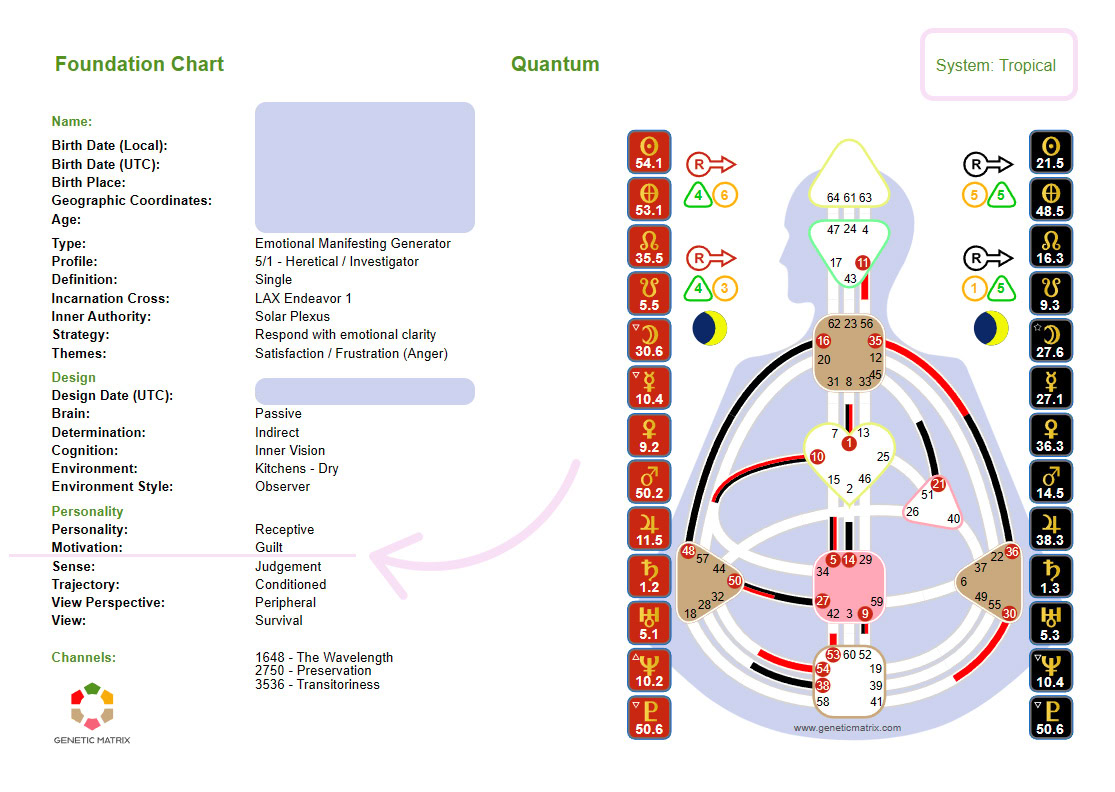
To explore this further, you will want to know your personal motivation. It is written right into your Human Design chart.
- Go to Genetic Matrix (affiliate link) and create your free chart.
- Look under the Variables section. You will see your motivation listed clearly.
- Keep in mind that knowing your motivation is not about adding pressure. It is about recognizing the unique way your energy naturally moves.
I will add a screenshot below to show exactly where to find it, so you can follow along with your own chart.
Rethinking Motivation: From Pressure to Permission
Most of what we are taught about motivation is built on pressure. Deadlines, accountability partners, strict routines, and rewards are all designed to create a sense of urgency. For many people, these tools can work. But for PDA humans, they often backfire. What feels like helpful structure to someone else can feel like a demand that instantly shuts you down.
The alternative is to shift from pressure into permission. Permission means giving yourself the space to follow what feels safe, aligned, and truly yours. Instead of asking, How do I force myself to do this? the question becomes, How do I set the conditions where my energy naturally wants to move?
This is where Human Design motivation can be so helpful. By knowing your unique driver, you can start noticing the difference between when you are trying to push yourself versus when you are allowing energy to flow.
Some gentle guidance to explore:
- Notice what feels like a demand. Pay attention to the moments where even simple tasks suddenly feel heavy or impossible. This is usually a sign that pressure has crept in.
- Ask what feels like choice. Sometimes the task itself is not the problem, it’s the framing. Shifting from “I have to” into “I choose to” can soften resistance.
- Look for small openings. Instead of tackling everything at once, see what one step feels approachable in this moment. Often, motivation builds once the first move is made.
- Experiment with your motivation type. If you are Hope-motivated, let yourself imagine possibilities instead of forcing certainty. If you are Need-motivated, focus only on the essentials and let the rest wait.
Motivation is not about willpower. It is about alignment. And for PDA humans, this alignment depends on permission, autonomy, and the freedom to follow what feels authentic.
Is This Just Human Design or Something Deeper?
Human Design talks about energy types and how some people are designed to initiate while others respond.
Psychology talks about things like Pathological Demand Avoidance (PDA), where external pressure can trigger intense resistance even when someone wants to do the thing.
Astrology looks at patterns in a birth chart that shape how we experience motivation, pressure, responsibility, and autonomy.
Different systems. Same theme.
Many people notice that certain struggles show up again and again in their life. And it’s not because they’re lazy or somehow broken, but because there’s a deeper pattern in how they respond to expectations, authority, and structure.
That’s part of what Your Personal Pattern™ explores.
Instead of predicting your future, it highlights the recurring themes in how you move through life. The motivations, tensions, and lessons that tend to repeat until you understand how to work with them instead of against them.
If motivation has always felt complicated for you, there may be a bigger pattern behind it.
Your Personal Pattern can help you see it.
A New Way of Seeing Motivation
When you begin to view motivation through this lens, everything changes. It stops being about discipline or fixing what feels broken. Instead, it becomes about recognizing that your energy has always known how to move… it simply needed a different kind of support.
For PDA humans, this shift can feel like permission to breathe again. You are not lazy, unmotivated, or flawed. You are wired to thrive when you have choice, when pressure is lifted, and when your actions come from a place of safety and alignment.
Human Design adds another layer of language to this truth. By understanding your unique motivation type, you can notice what actually sparks movement for you and release what never will. This is not about doing more. It is about trusting that the way your energy works is already enough.
Motivation does not have to be forced. It can be an invitation, a gentle pull, a self-sourced current that carries you forward. When you honor that, life opens in ways that feel both sustainable and deeply true.