
Observational Astrology and the Art of Pattern Recognition
Astrology is rarely understood all at once.
For most of us, it doesn’t click because of a single chart or a convincing explanation. It becomes meaningful through repetition. Through watching similar themes surface during similar transits. Through seeing how planetary cycles show up in real lives, over time, in ways that can’t be dismissed as coincidence.
This is where observational astrology lives.
What Is Observational Astrology?
Observational astrology is the practice of learning astrology through lived experience, repetition, and long-term pattern recognition rather than belief, doctrine, or theory alone.
It’s how astrologers begin to understand what planetary cycles actually do in practice, not just what they symbolize in books. By observing transits, progressions, and recurring themes across many charts and many seasons, astrology shifts from something intellectual into something recognizable.
Over time, patterns emerge.
Why Pattern Recognition Matters More Than Prediction
Astrology is often judged by its ability to predict specific outcomes. In reality, its strength lies elsewhere.
Observational astrology focuses less on forecasting events and more on identifying themes. Emotional states that resurface. Questions that return. Decisions that feel familiar. Similar pressures showing up during similar planetary cycles, even when the external circumstances differ.
This is how astrology becomes reliable without being rigid.
Patterns don’t tell you what will happen. They tell you what kind of terrain you’re moving through. And once that terrain is familiar, you navigate it differently.
How Observational Astrology Is Learned Over Time
Observational astrology isn’t learned quickly, and it isn’t learned passively.
It develops through years of watching charts in motion. Through tracking transits against lived experience. Through noticing how the same placement expresses differently depending on timing, maturity, and context.
With experience, astrologers stop reading placements in isolation. They begin to see relationships between cycles, choices, and growth. They recognize when a theme is asking for awareness rather than action, and when repetition is signaling something unresolved.
This is why astrology often feels more accurate the longer someone practices it. Not because the system changes, but because perception deepens.
Observational Astrology vs. Blind Belief
Observational astrology doesn’t require belief.
It requires curiosity and honesty.
You don’t have to subscribe to a particular philosophy or worldview to notice patterns. You only have to be willing to observe without forcing meaning too quickly. Many people come to trust astrology not because they were convinced, but because they began to recognize familiar dynamics repeating in their own lives.
This approach keeps astrology grounded. It allows interpretation to remain flexible rather than dogmatic, and it encourages discernment rather than certainty.
Belief can fluctuate. Patterns tend to persist.
Why This Approach Creates Better Astrology
When astrology is rooted in observation, it becomes more responsible.
It discourages fear-based forecasting and overstatement. It leaves room for choice, context, and personal agency. It acknowledges that timing interacts with free will rather than overriding it.
Observational astrology also makes astrology more useful. It supports practical application in areas like relationships, career, and personal growth without reducing people to placements or predictions.
Most importantly, it keeps astrology honest.
Astrology as a Practice of Attention
At its core, observational astrology is about paying attention.
To cycles.
To timing.
To how life responds when similar patterns repeat.
Over time, this attention builds trust, not in astrology as an idea, but in your ability to recognize what is happening when it is happening.
That recognition is what allows astrology to function as a meaningful tool rather than a belief system.
From Observation to Personal Pattern
Observational astrology teaches you to recognize patterns over time.
But what if you could see your core patterns mapped all at once?
Your Personal Pattern™ is a synthesis-based astrology report that reads your birth chart as a living system rather than a list of traits. Instead of isolating placements, it maps the recurring tensions, themes, and growth directions already shaping your life across work, relationships, money, and identity.
It is not predictive.
It is not personality labeling.
It is pattern recognition applied directly to your chart.
If you’re drawn to astrology because you keep noticing the same themes repeating in different forms, this is where that curiosity deepens.
Explore Your Personal Pattern™
See Your Chart Clearly First
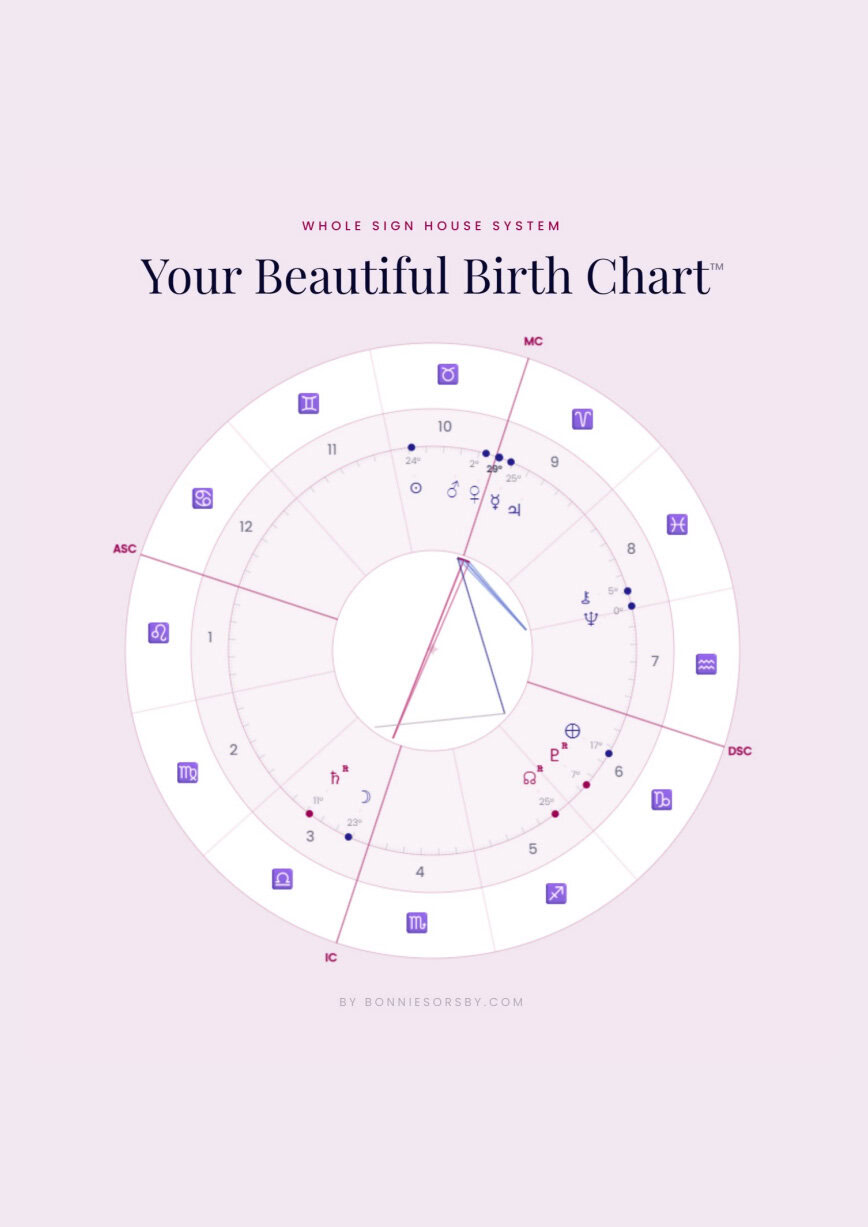
If you want a clean, beautifully structured view of your natal chart before diving into deeper synthesis, Your Beautiful Birth Chart™ provides a designed overview of your placements, houses, aspects, and planetary positions.
It is a visual foundation.
Your Personal Pattern™ is the interpretive layer that explains what those structures create in real life.
Start with clarity.
Then explore the pattern.
Explore Your Beautiful Birth Chart™
Going Deeper
Observational astrology develops through experience, not shortcuts. It’s shaped by watching charts unfold over years, noticing what repeats, and allowing interpretation to evolve with understanding.
This approach informs all of my work, from chart readings to applied astrology in areas like business, money, and personal alignment. Astrology becomes most useful when it’s treated as something to be practiced, not something to be proven.
Frequently Asked Questions About Observational Astrology
What is observational astrology?
Observational astrology is the practice of learning astrology through lived experience and long term pattern recognition rather than relying on theory or belief alone.
How is observational astrology different from predictive astrology?
Predictive astrology focuses on forecasting specific events. Observational astrology focuses on recognizing recurring themes, emotional cycles, and growth patterns over time.
Does observational astrology require belief?
No. It requires attention and curiosity. It is rooted in noticing repeated patterns rather than accepting fixed interpretations.
How do astrologers develop pattern recognition?
Through years of tracking transits, comparing charts, and observing how similar placements express under different conditions and life stages.
Can pattern recognition make astrology more accurate?
Pattern recognition does not promise exact outcomes. It improves interpretation by grounding it in repeated lived experience rather than abstract symbolism.