
Staffordshire Dogs: History, Meaning and How to Style Them Today
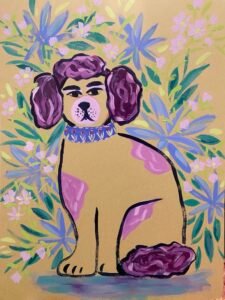
Staffordshire dogs are pottery dog figures, most famously matching pairs of spaniels, named for the Staffordshire Potteries of England where the best-known ones were made, and set on mantelpieces in homes all through the 1800s. The spaniels are often called comforter spaniels or mantel dogs, and in Scotland, china dogs like these are known as wally dugs. Today they are a favorite of traditional and grandmillennial decorators, and they have started showing up in my paintings too.
This post contains Amazon affiliate links. If you buy through them, I may earn a small commission at no extra cost to you.
Where Staffordshire Dogs Come From
Staffordshire, in the English Midlands, became Britain’s leading pottery-producing region in the 1700s and 1800s. The area around Stoke-on-Trent, known as the Potteries, had the clay and coal that pottery making needed, and its workshops turned out everything from dinnerware to small figures of shepherds, lions and dogs.
The dog figures were made in earthenware and painted by hand, many of them in large numbers for ordinary households. That is a big part of their charm: they were affordable decorations, made for real homes. Similar figures were also made elsewhere in England and in Scotland, but Staffordshire is the name that stuck.
Queen Victoria, Dash and the Spaniel Craze
Spaniels became the star of the Staffordshire kennel during Queen Victoria’s reign, from 1837 to 1901. Dog figures were already being made before her reign, but Victoria adored her King Charles spaniel, Dash, who was painted by Edwin Landseer, and her affection for the breed helped make the spaniel figures enormously popular from the 1840s on.
Most classic Staffordshire spaniels are white with red-brown or black patches, with painted eyes, a gilded collar and often a gold chain and locket. They typically sit upright, sometimes on a simple base, looking out at the room with great dignity.
Why Staffordshire Dogs Come in Pairs
Staffordshire dogs were usually sold as matching pairs, 1 facing left and 1 facing right, so they mirrored each other at the 2 ends of a mantelpiece. Many were made as flatbacks, with most of their modeling and painted detail on the front and a simpler back, made to be displayed against a wall or at the back of a mantel shelf.
That symmetry is why they still look so good today. A pair instantly frames a fireplace, a bookshelf or a console, the same way 2 matching lamps do.
The Legend of the Dogs in the Window
You may have heard that sailors’ wives set Staffordshire dogs in the window facing out while their husbands were at sea, and turned them to face in when they came home. Some versions of the story claim the dogs sent a signal to a secret admirer.
It is a wonderful story, and it survives in several versions that contradict each other. I have not found any evidence from the time that confirms it was a real custom, so I enjoy it as a legend that grew up around the figures.
Spaniels, Poodles, Greyhounds and Pugs
Spaniels are the most famous, but Staffordshire potters made many breeds. Poodles were a favorite, sometimes holding baskets in their mouths, and some were covered in tiny bits of textured clay to imitate curly fur, a look collectors today call confetti or spaghetti decoration. Greyhounds, pugs and hunting hounds appear too.
Antique, Vintage or Reproduction?
The heyday of Staffordshire figures ran from about the 1840s to the 1870s. As production expanded, makers found faster, less expensive methods, and later examples are often more simply modeled and decorated. Staffordshire potteries kept making dogs into the 1900s, sometimes using older molds, so a 20th century piece can still be a genuine Staffordshire dog. Modern reproductions are also common. Well-preserved Victorian pairs with their original matching partners are especially sought after by collectors.
If you have a pair and want to know their age or value, the most reliable answer comes from an appraiser or an auction house that specializes in English ceramics. For decorating, though, a well-made reproduction or a painted version can give you the same look.
How to Style Staffordshire Dogs Today
- On a mantel, 1 at each end, facing each other, the way they were made to sit.
- Flanking a bookshelf or a stack of books on a console or coffee table.
- With blue and white porcelain, ginger jars and chintz for a classic grandmillennial look.
- On a nightstand or dresser as a single dog, for a little personality in a bedroom.
- On the wall. A painting of a Staffordshire dog brings the same charm to a wall, and pairs beautifully with the figures themselves.
Where to Find Staffordshire-Style Dogs Today
If you want a pair on your own mantel without hunting through antique shops, these reproductions and Staffordshire-inspired pieces capture the look:
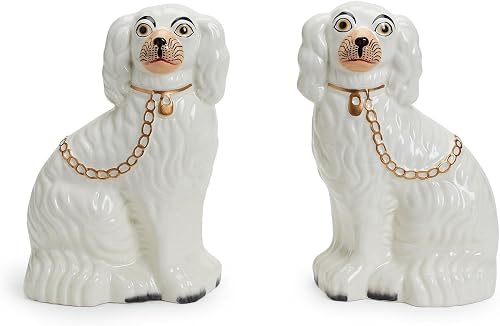 Two’s Company Staffordshire pairA left-facing and right-facing pair made to sit at the 2 ends of a mantel.See it on Amazon
 King Charles spaniel reproduction pairThe closest to the classic Victorian spaniels, with black patches and painted faces.See it on Amazon
 Floral spaniel pairSmall spaniels covered in pink roses, a chintz twist on the classic.See it on Amazon
 Creative Co-Op hand-painted dogsA slim, hand-painted pair with little red details.See it on Amazon
 Staffordshire dog with party picksA blue and white Staffordshire dog that holds cocktail picks, for a little charm on the table.See it on Amazon
Prices and availability change often, so check the listing for current details.
Staffordshire Dogs in Art: My Paintings
I have always loved how much personality these dogs have for something so simple. So I started painting my own.
She’s not like the old Staffordshire dogs that sit on mantels, and she’s committed to the look. Committed to the Look has a full fancy cut, tulips on her collar and a face that says she knows exactly what she is doing. Periwinkle flowers and teal and lime leaves fill in around her, on warm toned paper to help her stay grounded.
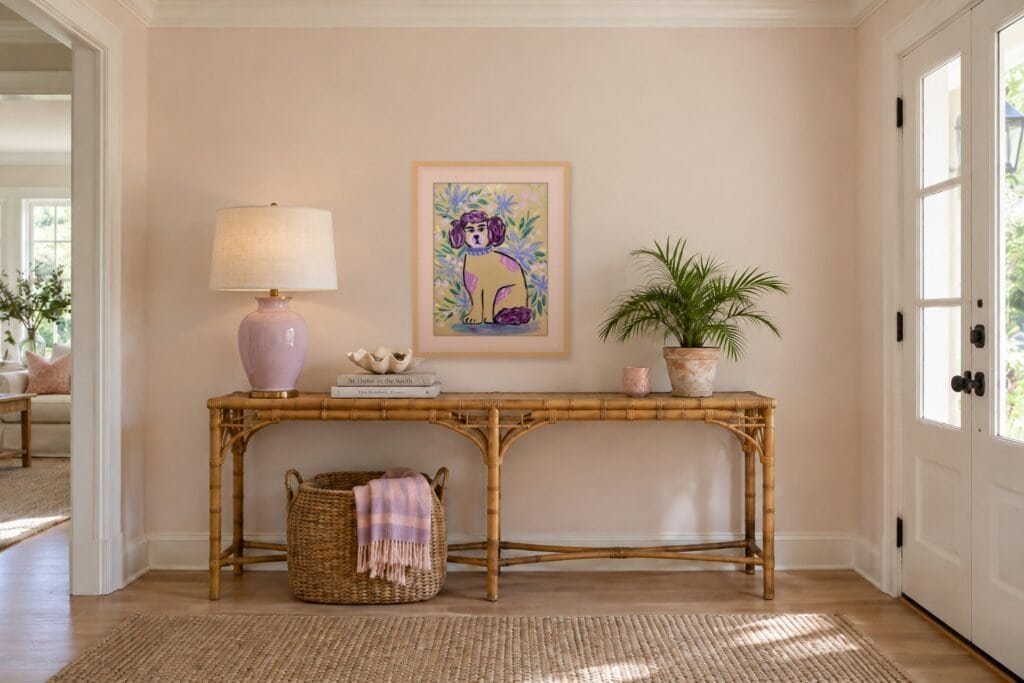
I am painting more of them, and I will add each one here as it is finished.
Frequently Asked Questions About Staffordshire Dogs
What are Staffordshire dogs?
Staffordshire dogs are hand-painted pottery dog figures, usually spaniels sold in matching pairs, named for the Staffordshire Potteries of England where most were made, and displayed on mantelpieces, especially during the Victorian era.
Why are Staffordshire dogs sold in pairs?
They were made as mirror images, 1 facing left and 1 facing right, to sit at the 2 ends of a mantelpiece.
What are wally dugs?
Wally dugs is the Scottish name for Staffordshire-style china dogs. “Wally” is a Scots word for china or porcelain, and “dug” means dog.
Why did Staffordshire spaniels become so popular?
Their popularity grew with Queen Victoria’s love for her King Charles spaniel, Dash, and from the 1840s on they became a common mantel decoration in English homes.
Is the story about dogs facing the window true?
It has never been confirmed. The story of sailors’ wives turning the dogs to signal survives in several versions, but there is no evidence from the time that it was a real custom.
If you would like to see my paintings, you can explore my original artwork, or ask about a commission.