
The Unexpected Red Theory: How to Use Red in Any Room
The unexpected red theory is a simple decorating idea: add a single red object to a room where red does not otherwise appear, and the whole space looks more finished. Brooklyn interior designer Taylor Migliazzo Simon coined it in a TikTok video that went viral in early 2024, and it caught on because it works in almost any style. As a painter, I think of it as the same trick artists have used for centuries.
This post contains Amazon affiliate links. If you buy through them, I may earn a small commission at no extra cost to you.
Why a Single Red Thing Works
Red is the color the eye finds first. In a room of soft neutrals, blues or greens, a single red accent becomes a resting point that pulls everything around it together.
Painters have leaned on this for a long time. Landscape painters often tucked a small note of red, a cap, a scarf or a flower, into a field of green, because red and green are complements and each makes the other look richer. Henri Matisse went the other way in Harmony in Red, filling a whole canvas with red and letting blue and green pattern dance across it.
In a room, the small dose is the point. The red should look a little surprising, as if it wandered in from somewhere else.
How to Use the Unexpected Red Theory
- Start with a calm room. The theory works best when red is not already part of the palette. Blue and white, pink and green, or warm neutrals are all great starting points.
- Pick 1 red thing. A lampshade, a ginger jar, a pillow, a garden stool or a piece of art. Resist the urge to add a matching second piece.
- Match the undertone. Tomato and coral reds suit warm rooms, while cherry and crimson suit cooler rooms with blue and white.
- Place it off center. A red object a little to the side draws the eye across the room and makes the space feel collected.
- Let art do it. A painting with a single red flower or a red mouth gives you the effect without buying anything new.
Red Theory in a Bedroom
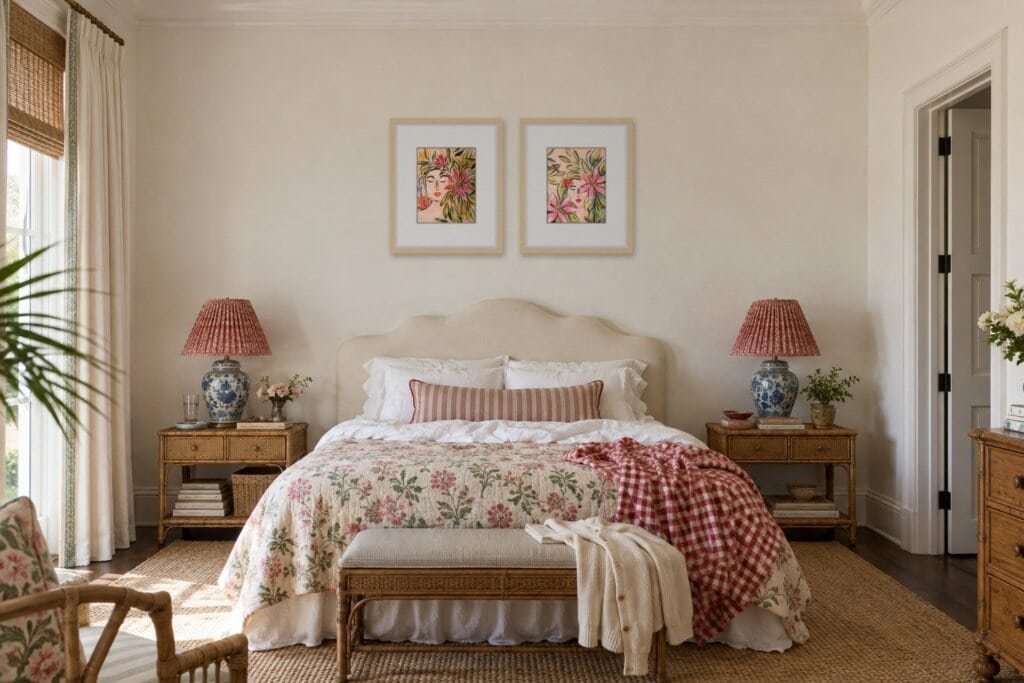
This bedroom starts calm: warm white walls, a cream headboard, blue and white lamps and a soft floral quilt. Red pleated lampshades are the surprise. The ticking pillow and gingham throw repeat the red in smaller doses, and the red flower in Tuned In carries it up onto the wall.
The original theory calls for a single red object. In practice, a main red moment plus a couple of small echoes often looks more finished, as long as red stays an accent.
Red Theory With Art
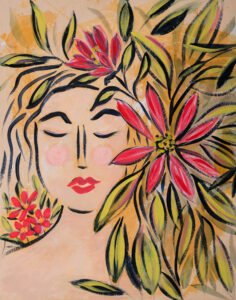
My painting Tuned In was made for this. She is soft and warm, with a single big coral-red flower tucked at her ear, and that flower is the first thing you see. Hang her in a calm room and she becomes the unexpected red. Her pair, Tuned Out, has pink flowers, so the 2 together give you red and a softer echo of it.
Red pieces to try
 Red enamel ginger jarRich red with fine pattern.See it on Amazon
 Red striped ginger jarCrisp red and white stripes.See it on Amazon
 Red chinoiserie garden stoolCoral red with white blossoms.See it on Amazon
Frequently Asked Questions About the Unexpected Red Theory
What is the unexpected red theory?
It is the idea that adding 1 red object to a room without red in it makes the whole space look more styled and intentional.
Who started the unexpected red theory?
Brooklyn interior designer Taylor Migliazzo Simon coined the term in a TikTok video that went viral in early 2024.
Does the red theory work in every room?
It works best in rooms with a calm palette where red does not already appear. In a room full of red, a red accent will blend in.
What red objects work best?
Lampshades, ginger jars, pillows, garden stools, books and art all work. Choose something you love, since it will be the first thing people notice.
If you would like a painting to be the red in your room, you can take a closer look at Tuned In or explore my original paintings.