
How to Frame Original Artwork
Framing original artwork means protecting the actual physical piece, not a print that can be reordered if something goes wrong. A painting on canvas, a canvas board, and a work on paper all frame differently, and the materials that keep one safe can damage another. I get this question from collectors who’ve just bought a piece from me, so here’s the real version, not the version that sells you the most expensive glass in the shop.
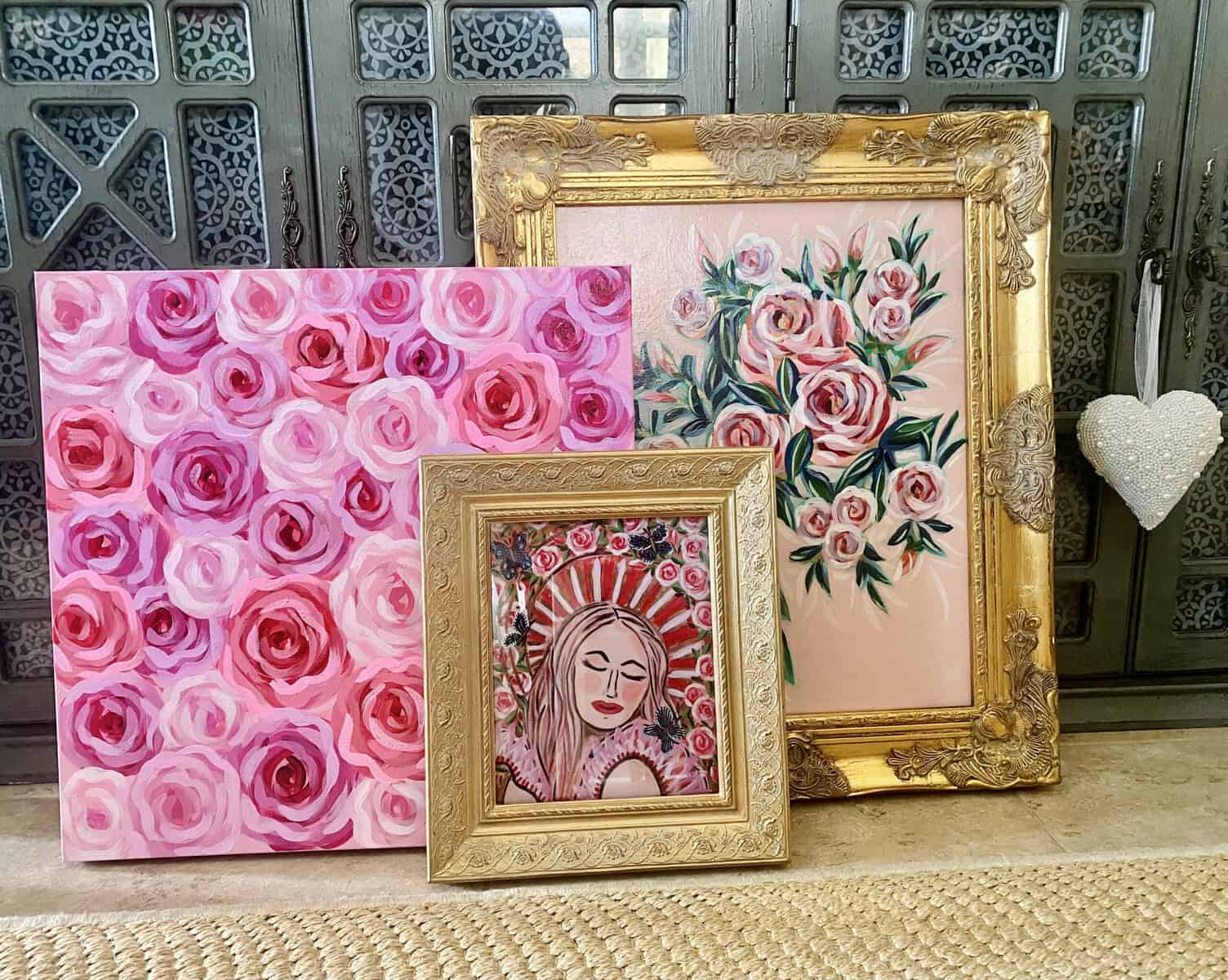
Start With What It’s Painted On
The medium decides everything else. Canvas, canvas board, and paper each need a different approach, and framing them all the same way is the fastest way to either damage the piece or spend money on protection it doesn’t need.
Canvas: No Glass, No Mat, Float It
A stretched canvas doesn’t go behind glass. The paint needs to breathe, and glass over canvas traps moisture and creates glare you can’t see the piece through. A floater frame is the standard choice: a frame with a gap between the canvas edge and the frame itself, so the canvas appears to float inside it instead of being boxed in. It’s also the only frame style that shows off the painted edges, which is why I paint mine all the way around.
Canvas Board: A Frame Directly, No Mat
Canvas board is rigid, so it doesn’t need the floating treatment a stretched canvas does. It sits directly inside a standard frame, no mat and usually no glass, since the painted surface doesn’t need the protection paper does.
Paper: Glass Always, but a Mat Is a Choice
Paper and glass can’t touch. Paper pressed flush against glass traps condensation and can stick to it permanently over time, so something has to hold that gap open. A mat is the usual way, and it also protects the edges of the piece.
But a mat isn’t the only way to get that separation.
A framer can build the gap with spacers instead, small acrylic rods set between the glass and the frame, which holds the glass off the paper without covering any of it. It’s a real look, not just a workaround, and it’s why I built a No Mat option into Try a Frame so you can see a piece both ways before you decide.
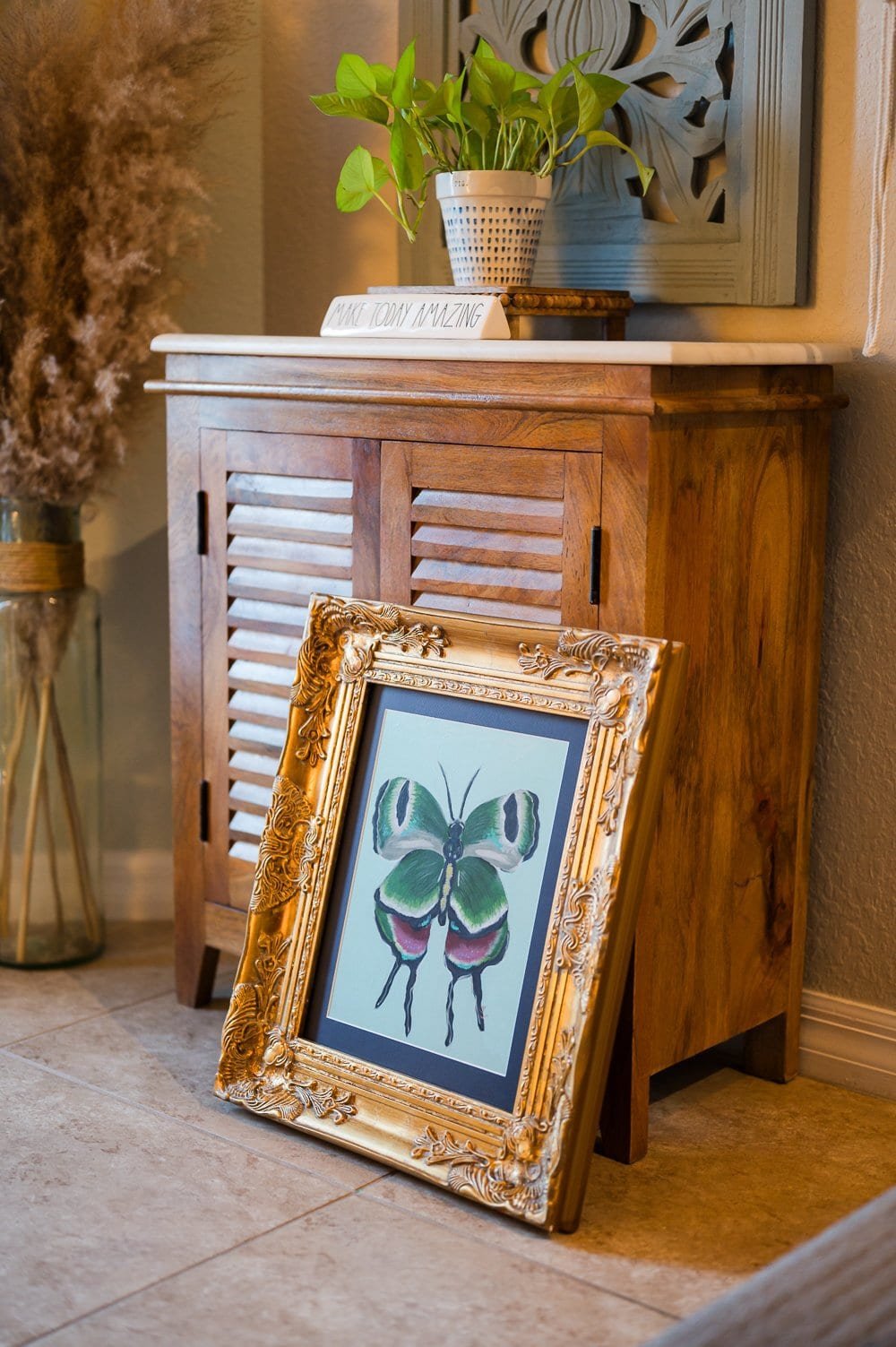
Choosing a Mat That Won’t Damage the Paper
Not all mat board is safe for original work. Standard wood-pulp mat contains lignin, and lignin breaks down into acid over time, which is what causes that yellow-brown stain creeping in from a mat’s edge on old photos and prints. For anything original, the mat should be labeled acid-free and lignin-free at minimum. Dick Blick’s framing guide points to 100% cotton rag mat board as the actual archival standard, since cotton starts free of lignin, while processed wood pulp has it removed afterward. It costs more than standard mat. For a piece you’re keeping for good, it’s the right place to spend.
Double Mats: Worth It When a Color Should Pop
A double mat is a second mat cut slightly larger than the main one, so a thin band of its color shows right at the edge of the window. It’s entirely a preference call, nothing about it protects the piece any differently than a single mat does. The reason to use one is when the piece has a color worth repeating. Pull that color into the reveal and the mat stops reading as neutral packaging and starts reading as part of the composition, like the frame noticed the same thing you did. I built a Double Mat option into Try a Frame with its own color picker for exactly this, so you can hold a color from the piece up against the reveal before committing to it.
Do You Need UV-Protective Glass?
If the piece will hang anywhere near natural light, yes. Standard picture glass still lets a large share of UV light through, which is exactly what fades color over time. The Frame Room’s glazing guide is a good plain-language breakdown of the options if you want to go deeper. Museum-grade or conservation glass blocks the large majority of UV and costs more, but it’s the difference between a painting that looks the same in 10 years and one that’s visibly faded.
Mounting Without Damaging the Piece
A canvas gets stretched over a wooden frame and staples on the back, which is standard and doesn’t touch the painted surface at all. Paper is the one that gets mounted wrong most often. Permanent glue or tape directly on the back of an original work is close to impossible to undo later without damaging it. Archival corner mounts or a hinge made from acid-free tape hold the paper in place without ever bonding it to the backing board, so the piece can come back out of the frame someday if it needs to.
DIY It or Call a Local Framer
A simple canvas floater frame is doable yourself, and that’s exactly why I built Try a Frame, a tool that lets you preview one of my paintings in different frame colors and thicknesses before you commit to anything. Paper is where I’d pay a professional. Cutting a clean mat window and mounting paper archivally takes real practice, and a bad cut on a good piece of cotton rag mat is an expensive mistake to make twice.
If you’re local to Palm Beach County, Artworks of Northwood in West Palm Beach is who I send people to. They use 100% acid-free materials and have been doing custom framing in the Northwood Village Arts District since 2019, which is the kind of specific, boring competence you want from a framer.
Frequently Asked Questions
Does an original painting on canvas need glass?
No. Glass over canvas traps moisture against the paint and creates glare. A floater frame with no glass is the standard for a stretched canvas.
What’s the difference between acid-free and archival mat board?
Acid-free means the lignin has been removed or neutralized during manufacturing. Archival, usually cotton rag, means the board never contained lignin to begin with. Both protect the art; cotton rag is the longer-lasting, more expensive option.
Can I frame a painting myself?
A canvas floater frame is a reasonable DIY project. Matting and mounting original paper work archivally is harder to get right and easier to get expensively wrong, so that’s the one I’d hand to a professional framer.
Does paper always need a mat?
No. The glass has to stay off the paper, but a mat is only one way to hold that gap. A framer can set the glass on spacers instead, which skips the mat entirely and shows the full sheet of paper, deckled edge included.
Curious what a piece would look like on your wall before you decide on any of this? Explore the studio, or start with Studio Steals if you’re not ready to commit to a full piece yet.